Stop Losing Product to Temperature Failures
Walk-in cooler and freezer installation, repair, and maintenance for Dallas food service and storage facilities.
When your walk-in unit stops holding temperature, you are racing against time and spoilage. Dallas summers put constant strain on refrigeration equipment, and even a few degrees of drift can mean throwing away inventory or failing a health inspection. You need a repair service that understands how these systems work under load and can respond before your business takes a loss.
Roma Services HVAC installs, repairs, and maintains walk-in coolers and freezers for restaurants, hospitals, schools, and distribution centers. We handle evaporator coil cleaning, condenser fan replacement, door seal repair, panel insulation, thermostat recalibration, and emergency response when your unit fails overnight. Preventative maintenance plans keep your system running between service calls and catch issues before they become expensive.
If your walk-in is running constantly or showing inconsistent temperatures, contact Roma Services HVAC in Dallas to schedule a diagnostic visit.
How We Restore Temperature Control
A technician from Roma Services HVAC arrives with manifold gauges, refrigerant recovery equipment, and replacement parts for common failure points. In Dallas, we see a lot of condenser issues caused by dust buildup and high ambient temperatures, so we start by checking airflow, refrigerant charge, and compressor function.
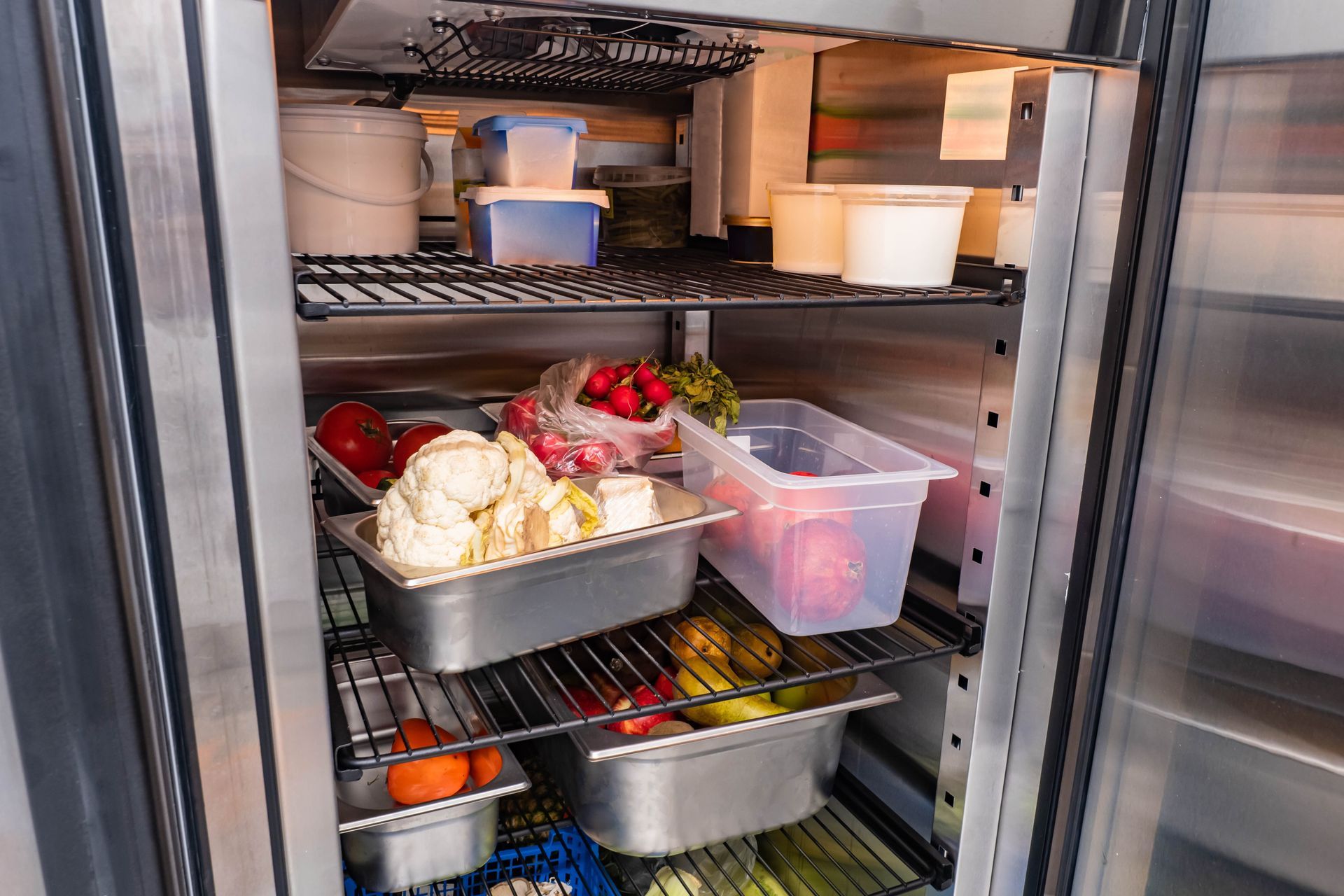
Once the repair is finished, your walk-in holds steady temperature without short cycling, frost stops building up on the evaporator, and the compressor runs quieter. You will see consistent readings on the thermostat and fewer alarms during peak usage hours.
We also inspect door gaskets for tears or compression loss, check that hinges and latches are sealing properly, and test defrost timers to make sure ice does not accumulate on coils. If panels are damaged or insulation is compromised, we coordinate repairs to restore thermal efficiency. This service does not include structural modifications or electrical panel upgrades, but we can refer you to qualified contractors if those are needed.
We Know You Have Questions
Most clients want to know what causes temperature failures, how long repairs take, and whether maintenance actually prevents breakdowns. Here are the answers we give most often.
Roma Services HVAC works with food service operations across Dallas that depend on walk-in units to protect inventory and meet health codes. If your cooler or freezer is not holding temperature or you want to set up a maintenance schedule, reach out to discuss your system and book a service call.